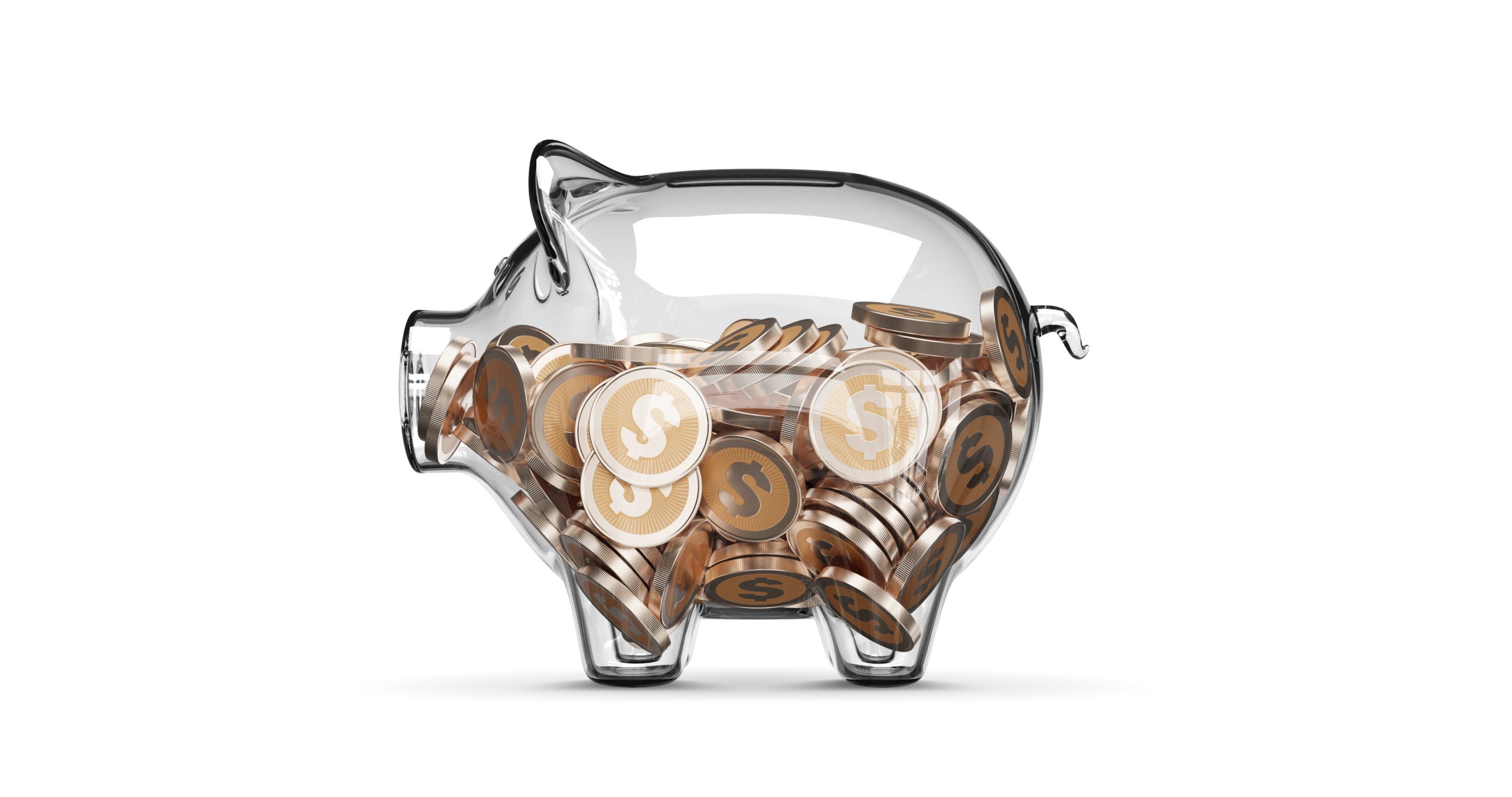
A question I’m commonly asked is, “How much cash should I really have?” What clients are really asking is how much they should hold in liquid, readily accessible funds, typically within a savings or cash equivalent account. While the answer ultimately depends on individual circumstances, there are several guiding principles that can help frame the decision.
Two-Income Household (3 months of expenses)
For a two-income household, the financial safety net is naturally strong. If both earners have stable jobs—particularly in different industries or roles that aren’t closely tied to the same economic risks—the likelihood of both incomes disappearing at the same time is relatively low. Because of this, maintaining about three months’ worth of expenses in cash is a reasonable target.
Three months of expenses provides enough cushion to handle unexpected disruptions, such as a temporary job loss, medical issue, or major home repair without tying up too much money in low-return cash holdings. It also allows more of your capital to remain invested for long-term growth.
However, it’s important to stress that “stable” doesn’t mean “guaranteed.” If both incomes come from the same company, industry, or are highly correlated (ex: both partners work in tech during a downturn), the risk increases, and so should your cash reserves. In those cases, leaning closer to six months of expenses may be more appropriate.
One-Income Household (6 months of expenses)
In contrast, a one-income household carries a higher level of financial vulnerability. With only one source of income supporting all expenses, any kind of financial disruption such as a layoff, illness, or other unforeseen circumstance, has a direct and immediate impact. Because there’s no secondary income to soften the blow, a larger emergency fund is essential. For this reason, a baseline recommendation of six months of expenses is generally more appropriate. This extended buffer provides the time and flexibility needed to search for new employment, adjust spending, or navigate unexpected life events without resorting to debt or liquidating long-term investments out of necessity.
Even within one-income households, nuance matters. If the sole earner works in a highly stable field with strong job security and in-demand skills, six months may be sufficient. But if income is variable, seasonal, or tied to economic cycles—such as freelance work, commission-based roles, or small business ownership—it may be wise to extend that cushion to nine or even twelve months.
Retired household (3 months of expenses)
As a retiree, three months of expenses should suffice to cover unexpected expenses that you may encounter. Of course, you can take the money from your investment account to cover these items, however, I find that individuals who have a comfortable level in their cash savings tend to be better investors because they don’t fret about market fluctuations as much as those with small cash savings. Understanding that you will not be forced to sell investments during down markets can be very reassuring.
How to calculate “living expenses”
An important part of this discussion is monthly living expenses. Most people don’t know how much they spend each month. And oftentimes, those same people are “confident” that they do know how much they spend … and greatly underestimate their actual spending.
Let’s make it simple. Start with your net income, that is how much money goes into your bank account from a paycheck. If you get two paychecks per month, look at your most recent paystub and multiply that number by two. Most people live at or very close to their net income. This may not be as bad as it sounds because they are saving money into their 401(k) before they get their paycheck. That’s a good start to solving the living expenses equation.
If you want to dive deeper, my recommendation is to review the last 6 months of spending. Ideally, review your bank statements and credit card bills. And don’t get caught in the minutia of every dollar spent; instead, focus on the big picture. Assuming you have the same amount of money in your bank account at the beginning of the month and the end of the month (and hopefully started with a $0 credit card balance and ended the month with $0) then you have confirmed that you spend your net income. If there is more money in the bank at the end of the month, you are spending less than your net income. If there is less, you may be spending more than you’re netting.
What to do with excess cash
If you find yourself in a situation where you have more cash than you need, congratulations!
Here are a few options to consider:
- Increase/Maximize your retirement account contributions
a. Increasing your 401(k) or similar pre-tax retirement account reduces your taxable income and helps to secure your financial future - Contribute to a brokerage account
a. No tax reduction, but can be invested and accessed without age requirements or penalties (ideal for those already making significant contributions to pre-tax or Roth accounts) - Contribute to a Health Savings Account (HSA)
a. The only investment vehicle that produces a double tax benefit (deduction and credit) - Contribute a 529 plan (if you have children)
a. Tax-free growth if used for qualified education expenses - Open other, specific cash accounts
a. If you have ear-marked expenses, those should be in addition to your regular cash savings
b. Examples: vacation fund, home renovation, new car etc.
Bonus tip: Make sure to mentally separate cash from investments. They have completely different objectives and characteristics. Don’t be too concerned with how much your cash is yielding. The main objectives for cash is liquidity and safety. It is likely not worth changing banks or savings accounts for another 0.10% (10 basis points). At the same time, be sure that your objective with your investments is the opposite. Ideally, your investments have a minimum timeframe of 5 years, so liquidity is not a necessity, and growth is the main focus.
The Bottom Line
Cash is a critical part of a healthy financial plan. Think of it as your financial shock absorber: essential for stability but not designed for long-term growth. Having the right amount of cash for you changes an emergency to an inconvenience and in the process, makes you a better investor.